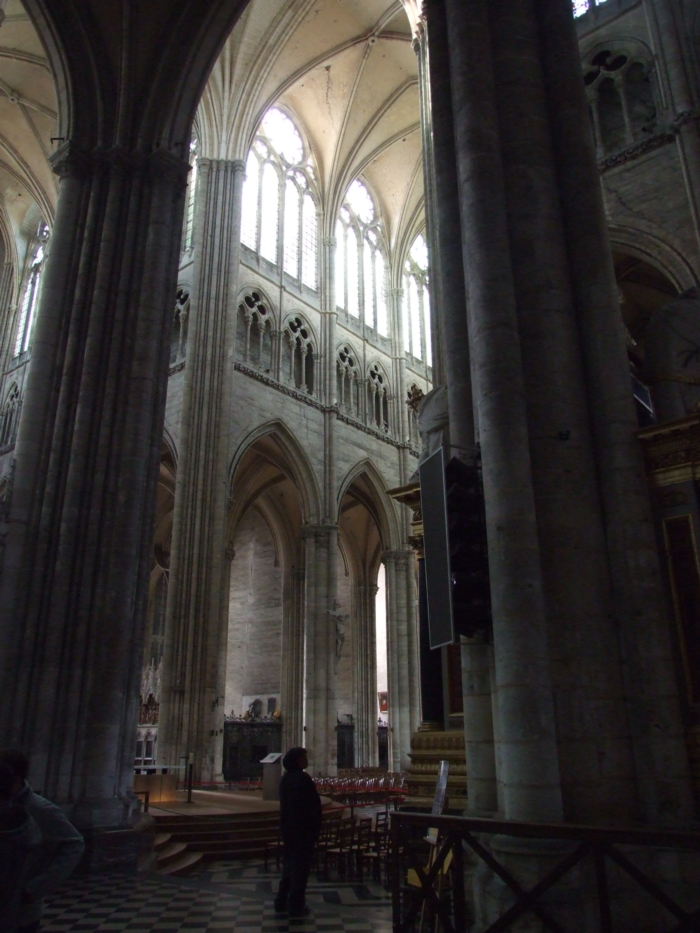
Below: Amiens cathedrale. We only spent an hour and a
half inside. Meant to return after our trip to the Somme, but
no time. The sculptures around the choir will keep my memory
busy for a long time. The dimensions are surreal.
Largest cathedrale in France in terms of volume, and the height of
the knave is only below Beauvais. 42 meters compared to Notre
Dame's 33, and Beauvais' 48, That's James in shadows below.
Below: Lochnagar mine crater. Left our little Renault next to
a barn in La Boisselle and walked a quarter mile to the
crater. This is what 48,000lbs of ammonia nitrate can
do. You can see the folks on the other side. 70 yards
across; 25 deep. An RAF pilot who observed the explosion said
that the column of the explosion reached 4,000 feet. It blew
at 07:38 on the 16th, two minutes before the assault.
Side note: on the way out of town I stopped at a little store, the
only store, attached to a house. Inside I was gently yelling
'bonjour' for a while, and finally a lady appeared from the
house. I bought some water, a baguette and some
camembert. The first baguette we'd bought in France.
James was delighted. The baguette was the best he'd ever had.
And the camembert fairly strong.
http://www.somme-1916.com/site02.htm

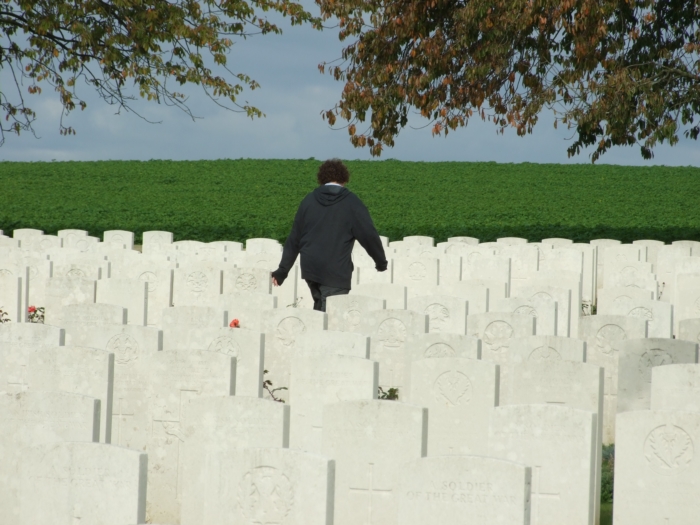
Ovillers cemetary. Just out of La Boisselle.
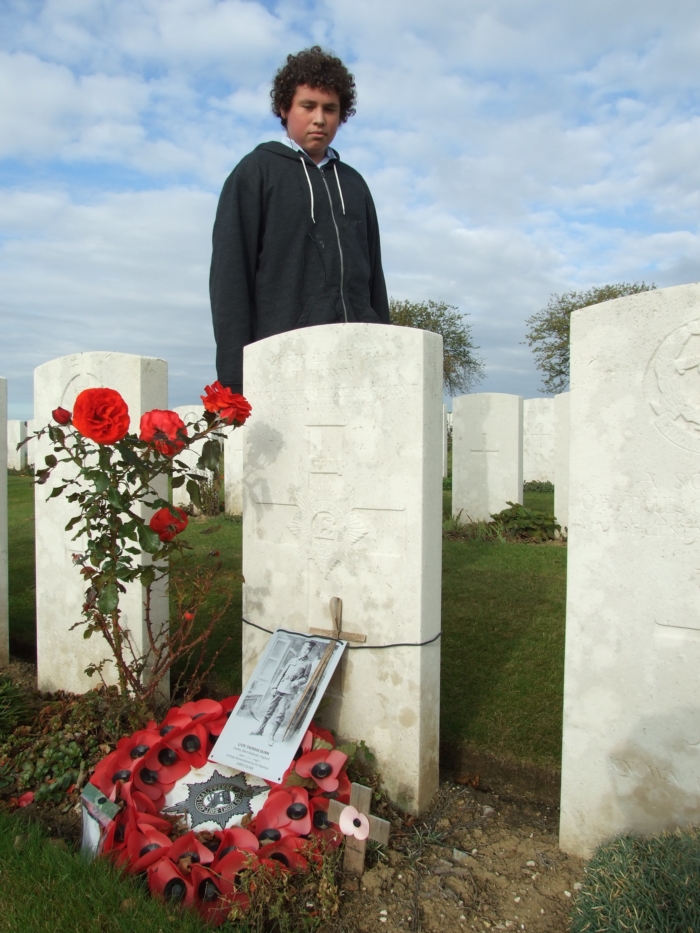
Below: Grave of Lance Corporal Thomas Dunne
http://www.worcestershireregiment.com/wr.php?main=inc/grave_dunn_20575
Others here fell in 1918, when the Germans made their last push back
across these lines.
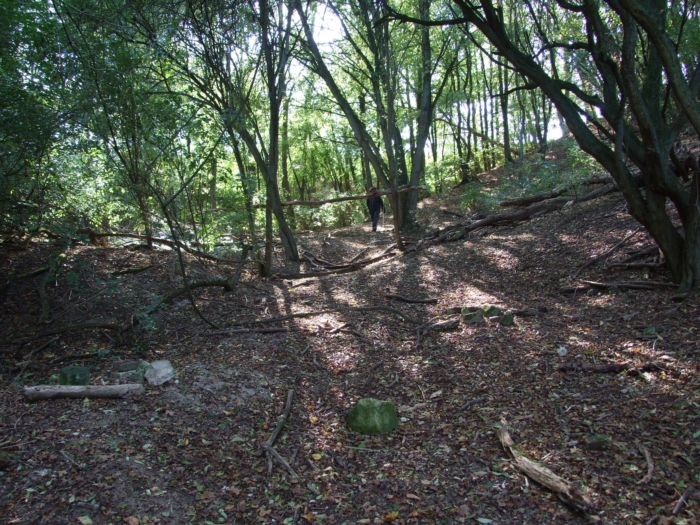
A tour bus of Brit highschool kids belwo. Sunken Lane -
Auchonvillers / Beaumont Hamel. 300 yards from the German
lines. Welsh miners dug a tunnel (entering from the
left) through the hill on left, from White City (as they called
it...a protected area 100+ yards to the left, behind the
hill...white, due to the chalk in the soil, which the farmers
collect in piles), getting the troops half the way to the German
trenches. The Brits detonated a mine (by a tunnel dug by Welsh
miners) underneath the Germans' 'Hawthorne' salient, but in the end,
it didn't help much (only killed 27 Germans killed). Similar
dimensions as the Lochnagar crater. The Lancashire Fussiliers
bolted across at 7:30, 10 minutes after they blew the mine, but
German machine-gun crews were able to climb out of their deep
trenches and set up, on both sides of the mine (after 5 days of
shelling -- they were losing their minds, it is written) and
slaughter the troops coming across the catered mud with 60 pounds on
their backs, and ..... the shelling never broke the layers of barbed
wired. The Lancashire Fusillers lost 500. This lane was
full of injured, dead and dying. The rest in the field to the
right.
A Brit camerman, Geoffrey Malin, hauled his camera through the
tunnel with the soldiers and recorded this:
http://www.youtube.com/watch?v=3Sb7urnjEaE
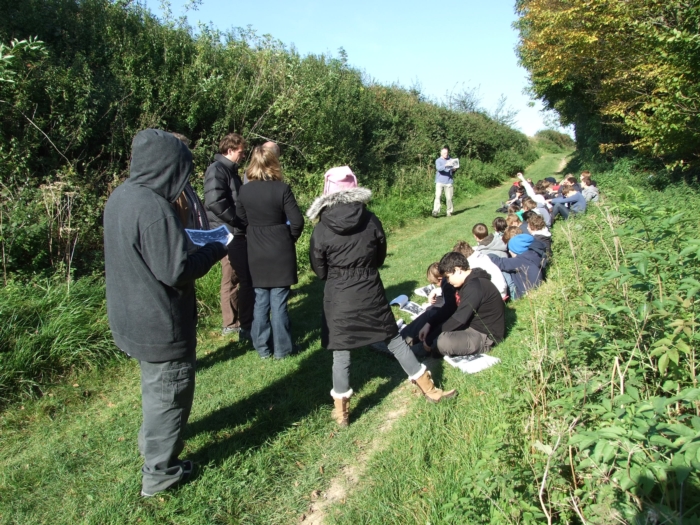
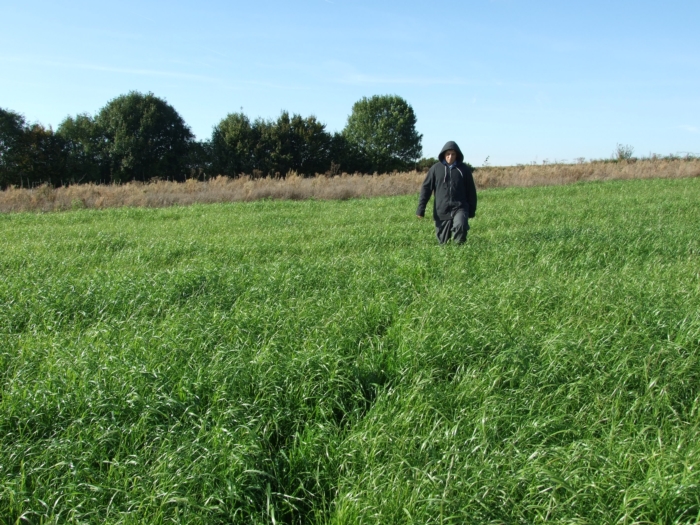
This field. Sunken lane in the trees to the left. James is
pretty much in the killing field.
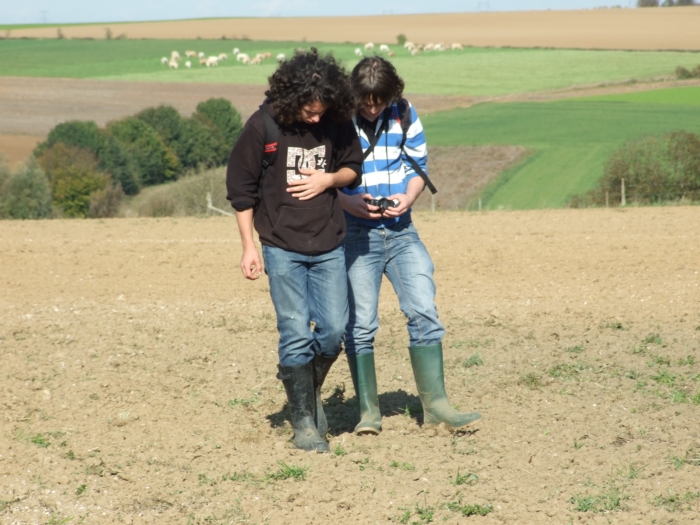
A couple Brit kids walking the field at the top of the hill, where
the German trenches were. They're looking for cartridges and
bone fragments. Sunken lane is in the trees to their
left. The Hawthorne crater is 100 yards to the right -- about
2 o'clock, from the kids.
Here's James in the Hawthorne Crater. To complicate things,
the Brits re-dug the tunnel in November, and blew it on the 13th,
with 30,000 lbs of ammonia nitrate. James is on the ridge
between the two. It was deep and dark in there. The
farmers dumped a lot of soil in both after the war, so originally
they were deeper.